
Bayesian STVC series models: A unified full-map approach to detecting spatiotemporal heterogeneity of variable relationships (2019, 2020, 2022a, 2022b).
BSTVC R pacakage (2025): Spatiotemporal heterogeneous perspective for analyzing influencing factors, identifying key drivers, and making dynamic predictions, all within a unified ‘full-map’ framework. https://github.com/songbi123/BSTVC
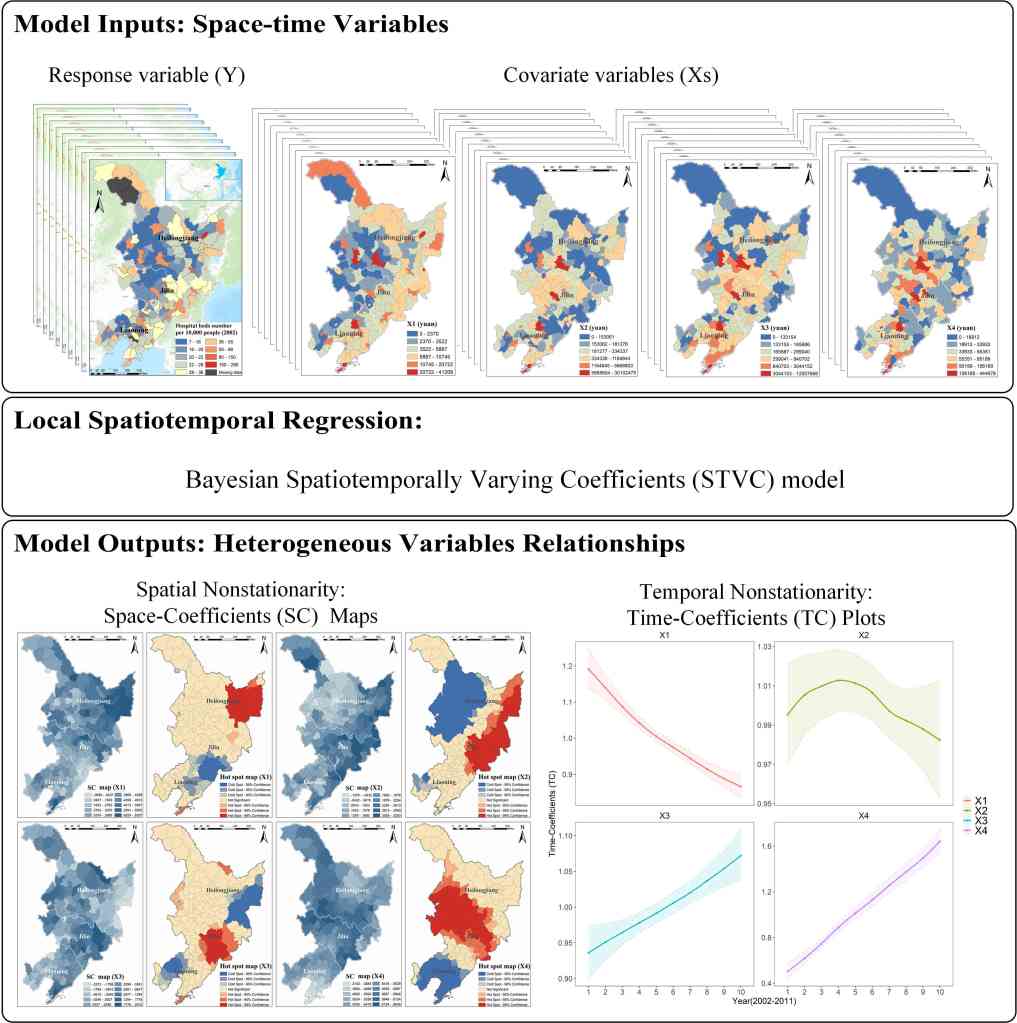
Spatiotemporally Varying Coefficients (STVC) model: A Bayesian local regression to detect spatial and temporal nonstationarity in variables relationships 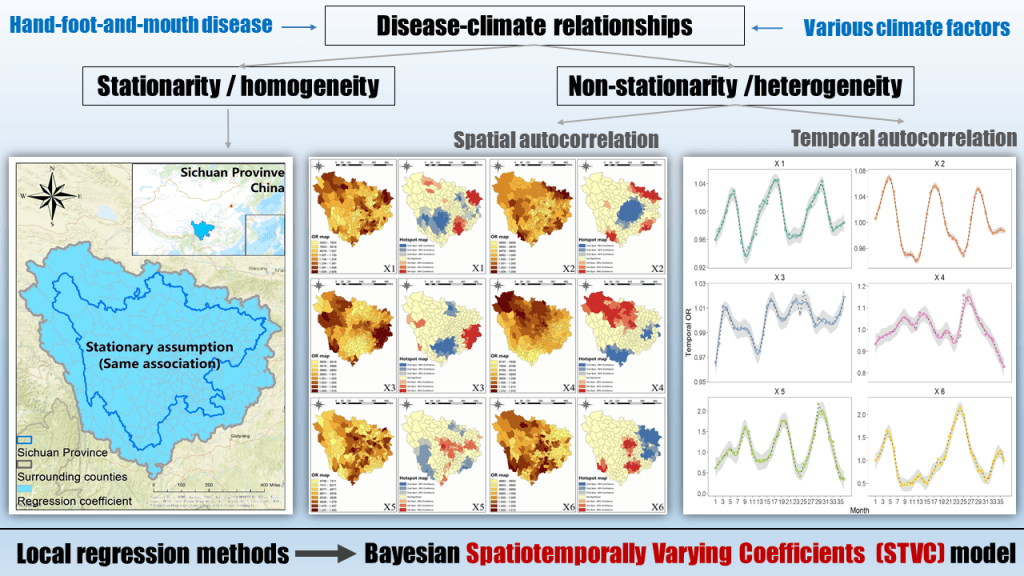
Exploring spatiotemporal nonstationary effects of climate factors on hand, foot, and mouth disease using Bayesian Spatiotemporally Varying Coefficients (STVC) model in Sichuan, China 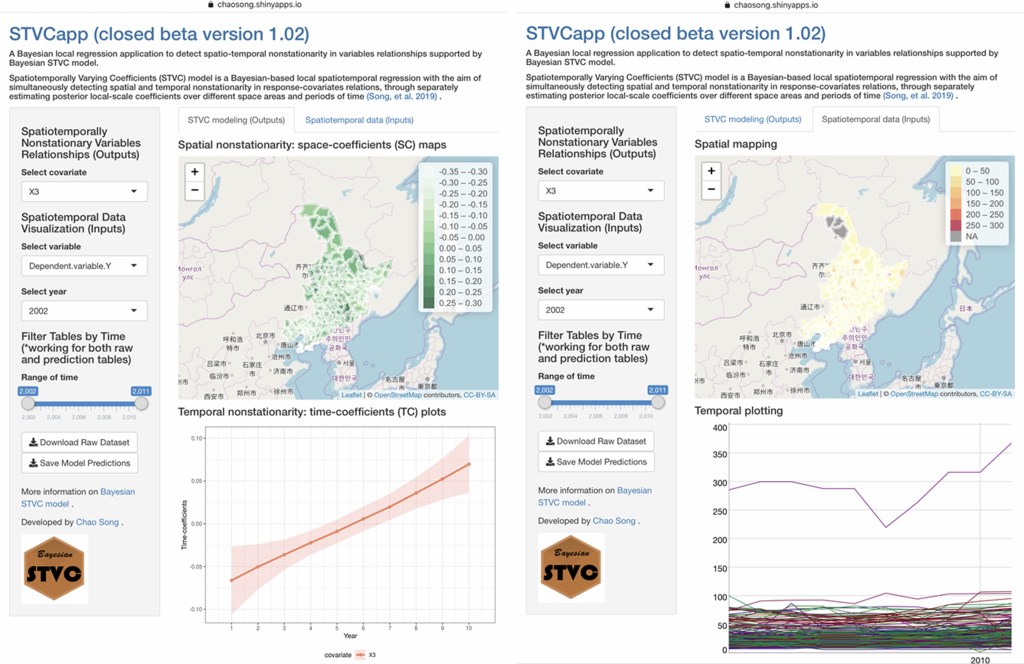
STVCapp: A Bayesian local regression application to detect spatio-temporal nonstationarity in variables relationships supported by Bayesian STVC model 
Winning of the best paper award 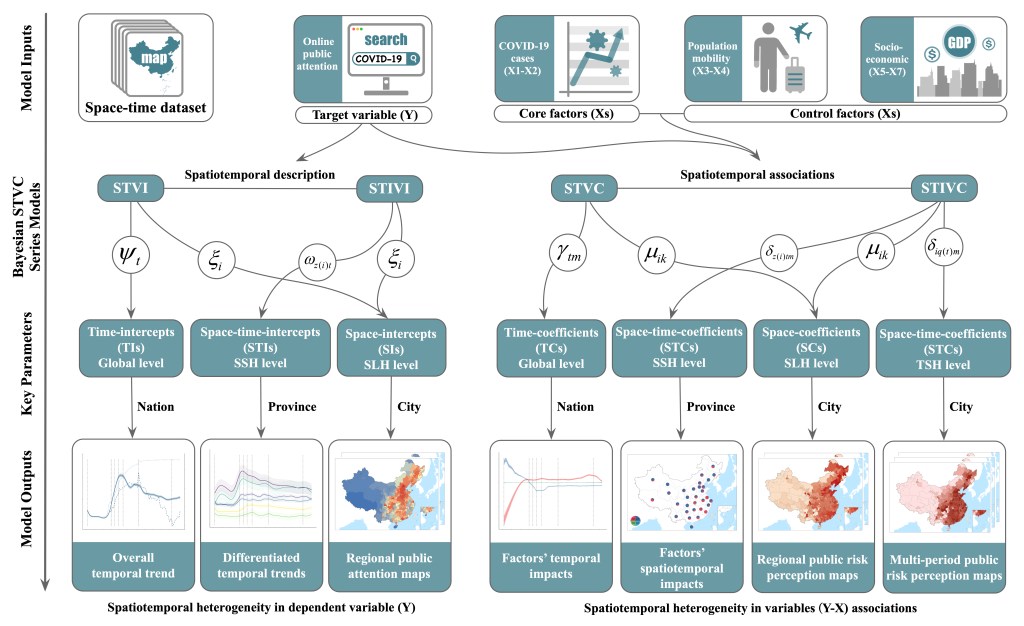
Bayesian STVC series models (2022) 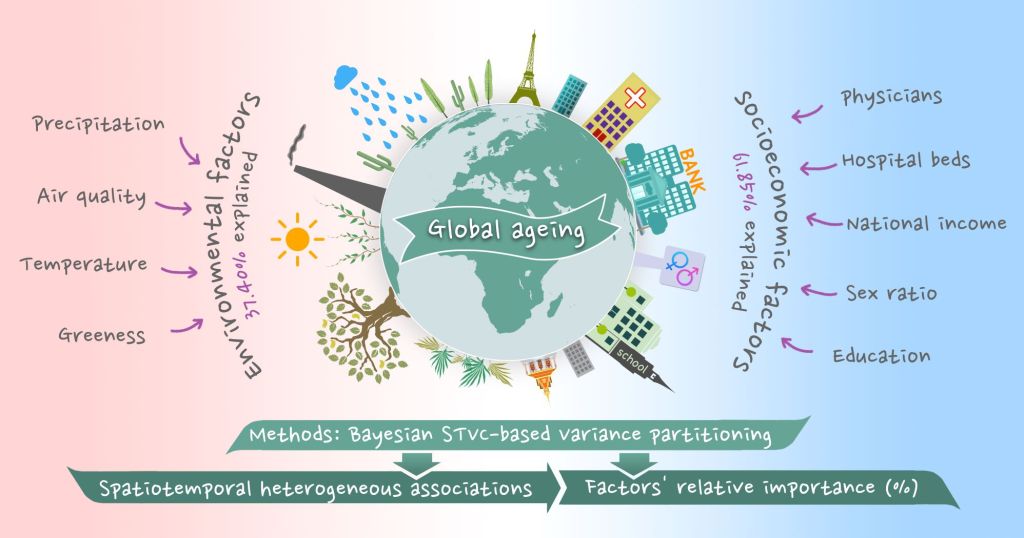
Introduction
We have proposed the series models of Bayesian STVC as a new kind of spatiotemporal non-stationary regression approach that can be widely used to explore spatiotemporally varying and multi-level relationships of variables, including temporal, spatial, and spatiotemporal interaction heterogeneity. Bayesian STVC series models are designed within the real full-map Bayesian hierarchical modeling framework with flexibility in model extensibility (Song, et al, 2022).
Bayesian STVC series models are aimed to analyze complex spatiotemporal heterogeneous associations between the target variable and various explanatory variables in the real world, which can be applied in broader nature and social sciences to solve space–time scale issues related to description, influencing factor analysis, and prediction (Song, et al, 2022).
The STVC (Song, et al. 2019, Song, et al. 2020) and STIVC (Song, et al, 2022) models are the two cores of Bayesian STVC series modeling, which are based on the non-stationary assumptions of spatiotemporal independence and spatiotemporal interaction, respectively.
Bayesian STVC model
Local regression has an advantage over global regression by allowing coefficients that qualify variables relationships to be heterogeneous, where such varying regression relationships are called nonstationarity.
【STVC】Spatiotemporally Varying Coefficients (STVC) model is a kind of Bayesian local spatiotemporal non-stationary regression, aiming to simultaneously quantify spatial and temporal heterogeneous associations between the dependent variable (Y) and various independent variables (Xs) with the consideration of spatial and temporal autocorrelation (Song, et al. 2019, Song, et al. 2020).
The Bayesian STVC model is designed to discover the structured spatiotemporal non-stationarity inherent in geospatial-related research questions. Compared with the frequentist-based local spatiotemporal non-stationary regressions, Bayesian ones have the advantages of being a real full-map (complete and unified) modeling approach, incorporating prior knowledge and uncertainties (credible intervals on parameters) into modeling directly, as well as being much more flexible in model extensibility (Song, et al. 2020).
Compared with the global-scale spatiotemporal regression models, the fundamental advantage of the local-scale Bayesian STVC model is further incorporating the spatial-temporal autocorrelated nonstationarity for the observable underlying covariates within the Bayesian hierarchical modeling (BHM) framework. Such spatiotemporal heterogeneous variables relationships cannot be detected via the adoption of conventional global-scaled regressions, local-scaled spatial or temporal regressions, or mainstream spatiotemporal regressions (Song, et al. 2020b).
Bayesian STVC modeling is proposed as a new tool for space-time influencing factors analysis to provide potential clues for the spatiotemporal attribution, as well as for the purpose of spatiotemporal prediction, which should offer new insights into solving similar issues in broader GIScience, spatial statistics, geostatistics, as well as geospatial-related disciplines.
Bayesian STIVC model
【STIVC】A potential limitation of the original Bayesian STVC modeling lies in its assumption of space–time independence. We propose a Bayesian Spatiotemporally Interacting Varying Coefficients (STIVC) model to incorporate the non-stationary random effects of spatiotemporal interaction for covariates (explanatory factors) at the spatial stratified heterogeneity (SSH) level, instead of at the spatial local heterogeneity (SLH) level (the most refined spatial scale) (Song, et al, 2022).
Geographical SSH is ubiquitous in the real natural world and society, for example, climate zones, worldwide continents, and various administrative levels within a country or a region. Hence, the STIVC model using SSH to define the spatiotemporal interaction is called the standard STIVC model.
Instead of weakening the space scale based on SSH, we introduce the temporal stratified heterogeneity (TSH) to develop an extended variant of the Bayesian STIVC model by defining the spatiotemporal interaction random effect through grouping the time span, leading to the regression relationships of variables kept to the smallest space scale but with temporal disparities across various stages.
Compared with the previous STVC model, in addition to considering space–time interactions, another advantage of the improved STIVC model resides in its flexibility in analyzing complex space–time coupling data organized in two levels, such as counties/cities within states/provinces at the space scale, or days/seasons within months/years at the time scale.
Moreover, by introducing spatial (or temporal) stratified heterogeneity to define the spatiotemporal interaction non-stationarity, the STIVC model not only ensures the proper complexity of the model and the feasibility of Bayesian inference and improves model fit and prediction ability, but also avoids the over-fitting problem of an SLH-level spatiotemporal interaction non-stationary regression (Song, et al, 2022).
Spatiotemporal Variance Partitioning Index (STVPI)
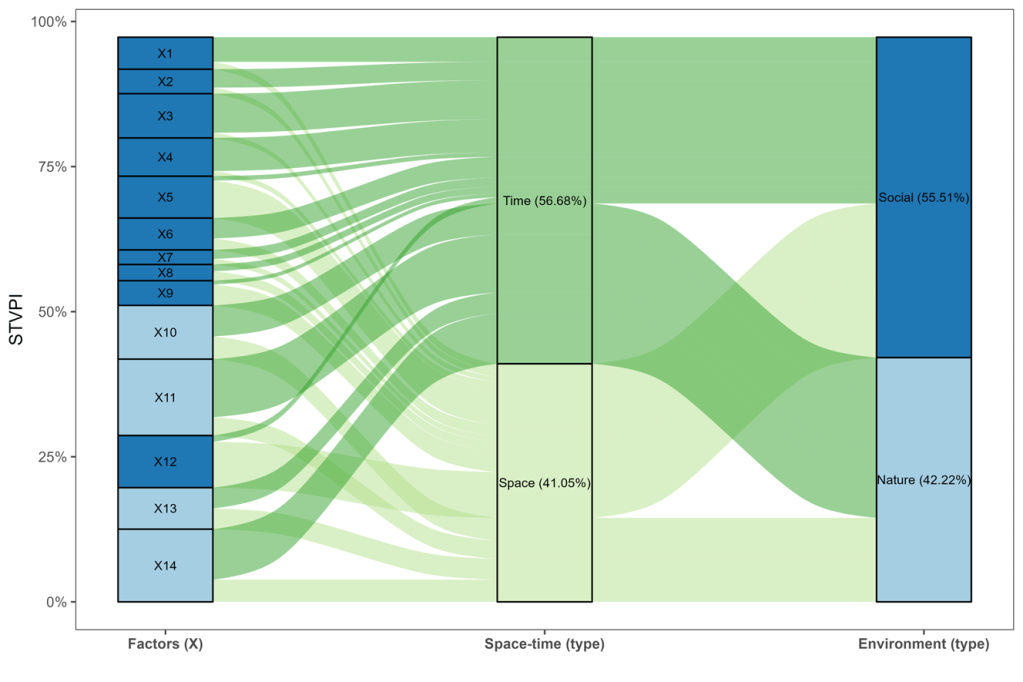
2022. We innovatively introduced the variance partitioning theory to extend the Bayesian STVC modeling system in order to propose a spatiotemporal variance partitioning index (STVPI) to characterize the space-time relative importance (explainable percentage) of explanatory factors on the target variable (Wan, et.al. 2022).
The STVPI can be used as a new screening tool for space-time factors. The traditional methods used for factor selection are based on the hypothesis of stationarity without considering the spatiotemporal heterogeneous influences of explanatory factors. Hence, for spatiotemporal-oriented studies, we recommend the use of STVPI to evaluate the importance of candidate variables, which should be a better option than traditional stationary-based approaches.
The STVPI successfully demonstrated the close associations between socioeconomic development and environment and national ageing globally over the last twenty years and identified the five most critical influencing factors (Wan, et.al. 2022).
Theoretical articles of Bayesian STVC series models
2022: Spatiotemporal disparities in regional public risk perception of COVID-19 using Bayesian Spatiotemporally Varying Coefficients (STVC) series models across Chinese cities. International Journal of Disaster Risk Reduction 2022:103078. DOI: 10.1016/j.ijdrr.2022.103078.
2022 (STVPI): Spatiotemporal heterogeneity in associations of national population ageing with socioeconomic and environmental factors at the global scale, Journal of Cleaner Production, 2022. DOI: 10.1016/j.jclepro.2022.133781.
2020: Spatiotemporally Varying Coefficients (STVC) model: a Bayesian local regression to detect spatial and temporal nonstationarity in variables relationships.” Annals of GIS (2020). DOI: 10.1080/19475683.2020.1782469. (First place in Annals of GIS best paper award 2020)
2019: Exploring spatiotemporal nonstationary effects of climate factors on hand, foot, and mouth disease using Bayesian Spatiotemporally Varying Coefficients (STVC) model in Sichuan, China. Science of the total environment (2019). DOI: https://doi.org/10.1016/j.scitotenv.2018.08.114 (ESI highly cited paper in 2019) (Download PDF)
R pacakage BSTVC (Bayesian Spatiotemporally Varying Coefficients modeling), since 2025

Spatiotemporal heterogeneous perspective for analyzing influencing factors, identifying key drivers, and making dynamic predictions, all within a unified ‘full-map’ framework. https://github.com/songbi123/BSTVC
Features & Advantages
The BSTVC R package is designed to provide a comprehensive suite of functionalities for advanced spatiotemporal heterogeneous analysis. Here’s what our package can do for you:
- Targeting multiple types of response variables: It supports three mainstream types of response variables: continuous (log-Gaussian regression), binary (logistic regression), and count (Poisson regression), accommodating various analytical scenarios.
- Detecting spatiotemporal heterogeneous impact mechanisms: By fitting spatiotemporal regression coefficients, it reveals local spatiotemporal differences between explanatory variables (X) and response variables (Y), facilitating an in-depth analysis of context-specific patterns and exploring the impact mechanisms brought by spatiotemporal heterogeneity.
- Identifying spatiotemporal driving factors: On the basis of identifying spatiotemporal heterogeneous impact mechanisms, it clarifies key driving factors by calculating the spatiotemporal explainable percentage, providing strong evidence for geographical spatiotemporal attribution.
- Improving spatiotemporal prediction accuracy: Considering the spatiotemporal heterogeneity of local variable relationships, it significantly improves model fitting and prediction accuracy, which can be used for spatiotemporal missing value imputation, spatiotemporal smoothing, and future forecasting.
- Bayesian model assessment: It provides a comprehensive evaluation of Bayesian regression models, including model fitting (DIC, WAIC), complexity (pd), and prediction accuracy (LS) indicators, helping users fully understand model performance.
- Rich visualization outputs: It provides a variety of spatiotemporal visualization tools and codes to help users intuitively understand model results, enhance the interpretability of data analysis, and promote innovation in your applied research.
Bayesian STVC model is a powerful analytical tool with many advantages that other similar tools lack, such as a “full-map” modeling framework, parameter uncertainty, friendliness to missing values, and support for more spatial weight matrices, among others.
CONTACT
Contact: Welcome to utilize this sophisticated Bayesian STVC modeling method for your own research, and feel free to contact us (chaosong.gis@gmail.com). Newly developed Bayesian STVC-based statistical models, more empirical cases, as well as a mature STVC-based app, will come in the near future. More information on the Baidu Baike (in Chinese).
BSTVC R package: We welcome and encourage user contributions, including reporting issues, requesting new features, or submitting code changes. If you encounter any problems when using the BSTVC package or need further assistance, you can get support through the following means:
- GitHub issues: Report issues or request new features in theGitHub repository, please visit Issues.
- Email contact: tangxxxxt@163.com(Tang Xianteng, related to R package usage); chaosong.gis@gmail.com (Song Chao, related to statistical theory)
- Bayesian STVC model: https://chaosong.blog/bayesian-stvc/
Copyright ©HEOA-West China Health and Medical Geography Research Group
If you are a WeChat user, you are welcome to scan the QR code to follow our research group’s official account: HealthGeography

Cases using Bayesian STVC series models
Case 1 (2018): Hand, foot, and mouth disease (HFMD) and climate factors.
We proposed the Spatiotemporally Varying Coefficients (STVC) model, a first Bayesian-based local spatiotemporal regression, to simultaneously detect the spatial and temporal nonstationarity in heterogeneous response-covariate variables relationships, by taking advantage of both Bayesian statistics theories and hierarchical modeling framework, as well as separately estimating posterior local-scale regression coefficients to vary across space and over time (Song, Shi, et al. 2019). The Bayesian STVC model turns out to be a feasible prototype for relatively larger-scale space-time data, supported by a real-world epidemiological hand, foot, and mouth disease case.
In this case, the STVC model with logistic prior distribution was able to further spatialize the risk indicator odds ratio (OR) into local ORs to represent spatial and temporal varying disease-climate relationships. For hand, foot, and mouth disease (HFMD), by using local OR epidemiologic indicators, we detected local temporal nonlinear seasonal trends and spatial hot spots for both disease occurrence and disease-climate associations over 36 months in Sichuan, China.
Case 2 (2020): Healthcare resources and socioeconomic conditions in northeast China
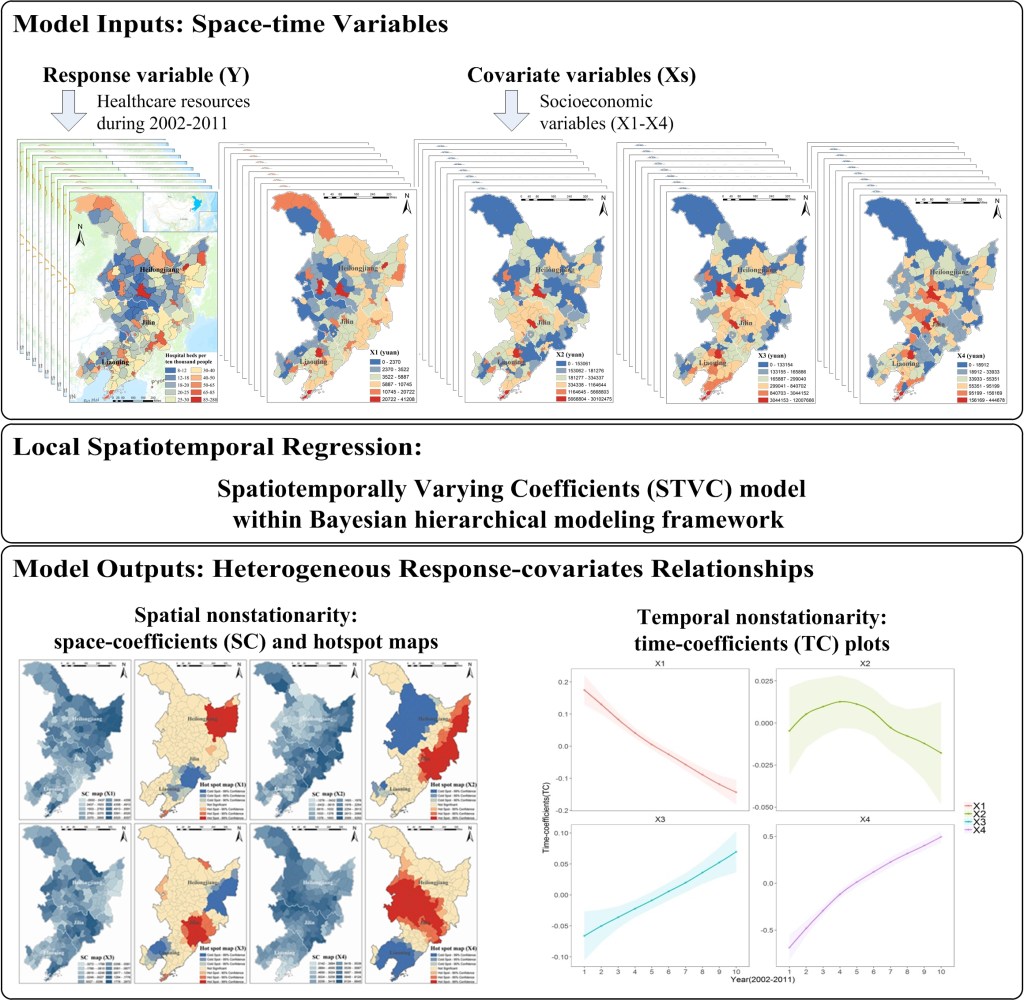
We presented a literature review of the theoretical statistical basis of the newly proposed Bayesian Spatiotemporally Varying Coefficients (STVC) model, which is the first Bayesian-based local spatiotemporal regression method to detect spatial and temporal nonstationarity in heterogeneous relationships among variables. A general formula paradigm of Bayesian STVC modeling was introduced in detail for the first time, to provide a guideline for practitioners to develop custom-built STVC models to solve broader issues in the real world. We further applied the Bayesian STVC model to firstly explore the spatiotemporal heterogeneous relationships between the county-level healthcare resources and various socioeconomic conditions in northeast China for ten years, expanding the limited knowledge of the complex local-scale healthcare equalities (Song, et al. 2020).
Case 3 (2020): Estimation of county-level healthcare resources of hospital beds across southwest China.
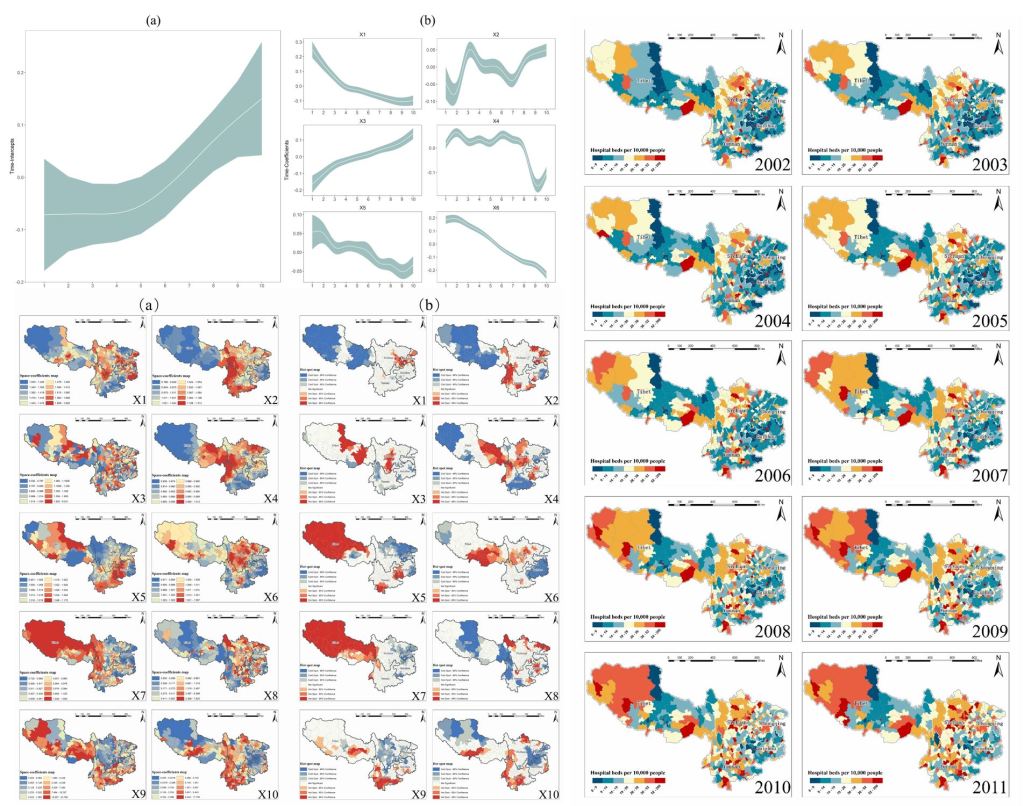
We validated the hypothetical theories that both environmental and socioeconomic aspects had pivotal roles in affecting the small-area healthcare resource inequalities, and such covariate impacts varied locally (heterogeneity) along with both space and time scales, which had been supported by the advanced Bayesian STVC modeling of the county-level hospital beds data in southwest China. Our findings reported that in addition to socioeconomic factors, environmental factors also had a significant impact on healthcare resource inequalities at both global and local space-time scales. Globally, the personal economy was identified as the most significant explanatory factor. However, the temporal impacts of the personal economy demonstrated a gradual decline, while the impacts of the regional economy and government investment showed a constant growth from 2002 to 2011. Spatially, geographical clustered regions for both hospital bed distributions and various hospital beds-covariates relationships were detected. Finally, the first spatiotemporal series of complete county-level hospital beds inequality maps in southwest China was produced. This work is expected to provide evidence-based implications for future policymaking procedures to improve healthcare equality from a spatiotemporal perspective.
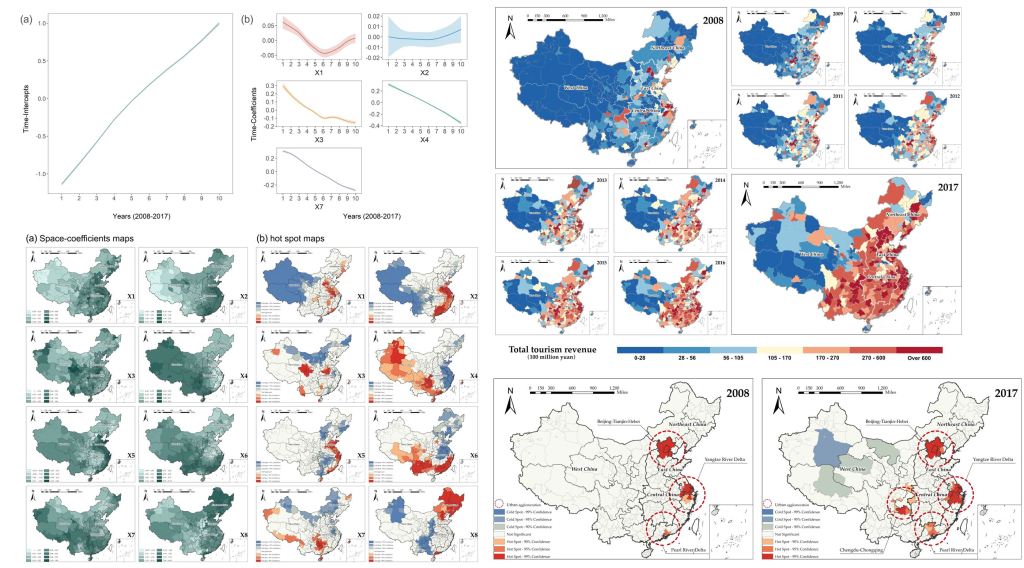
Case 4 (2021): Socioeconomic and Environmental Impacts on Regional Tourism across Chinese Cities.
Understanding the geospatial impacts of multi-sourced drivers on the tourism industry is of great significance for formulating tourism development policies tailored to regional-specific needs. To date, no research in China has explored the combined impacts of socioeconomic and environmental drivers on city-level tourism from a spatiotemporal heterogeneous perspective. We collected the total tourism revenue indicator and 30 potential influencing factors from 343 cities across China during 2008–2017. Three mainstream regressions and an emerging local spatiotemporal regression named the Bayesian spatiotemporally varying coefficients (Bayesian STVC) model were constructed to investigate the global-scale stationary and local-scale spatiotemporal nonstationary relationships between city-level tourism and various vital drivers. The Bayesian STVC model achieved the best model performance. Our local spatiotemporal analysis framework for geographical tourism data is expected to provide insights into adjusting regional measures to local conditions and temporal variations in broader social and natural sciences.
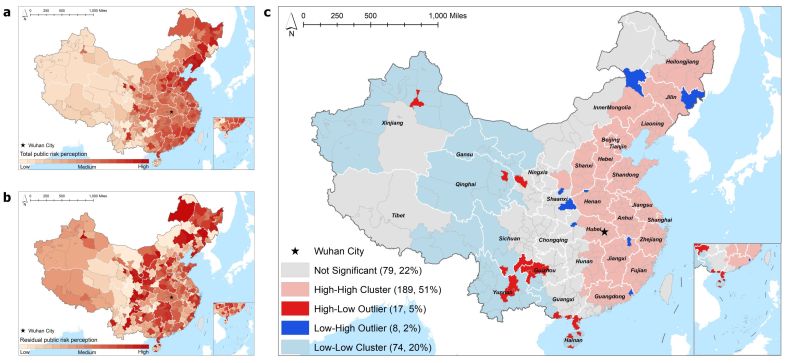
Case 5 (2021): Spatiotemporal disparities in regional public risk perception to the COVID-19 pandemic.
For this COVID-19 case, Bayesian STVC series models were successfully used to achieve the spatiotemporal analysis of the description and influencing factors for regional public attention and to further estimate the regional public risk perception index (PRPI) for advanced cluster and outlier mapping analysis to identify sensitive areas (Song, et al, 2022).
A multi-level spatiotemporal heterogeneous analytical framework was also well designed by taking advantage of the Bayesian STVC series modeling to assist in coming up with spatially targeted and rapidly changing strategies for the ongoing COVID-19 pandemic and major emergencies in the future (Song, et al, 2022).
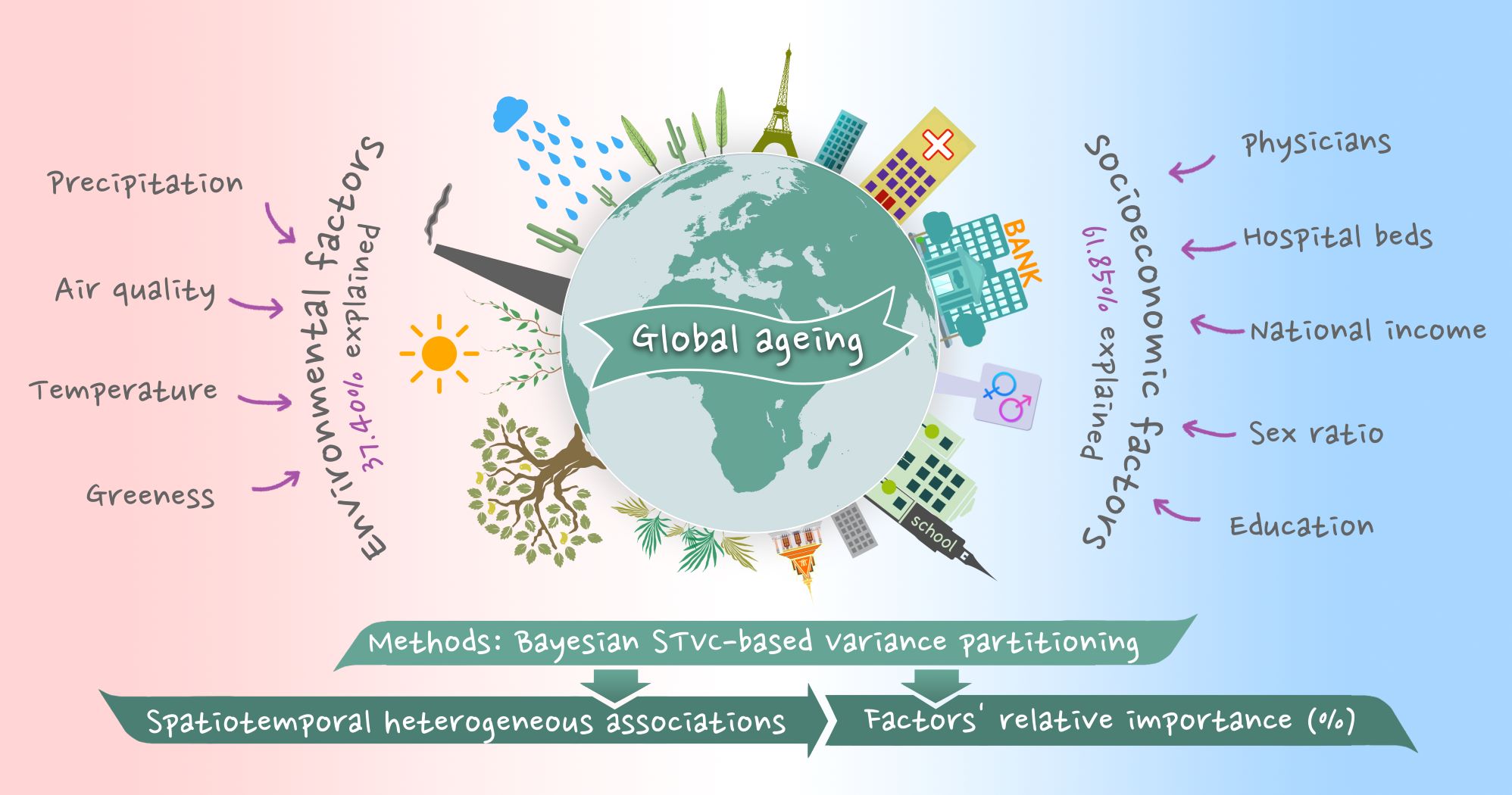
Case 6 (2022): Spatiotemporal heterogeneity in associations of national population ageing with socioeconomic and environmental factors at the global scale.
Concerted and sustained global action to prepare for and respond to population ageing is essential to ensure progress toward the achievement of the SDGs related to ageing, as highlighted in the 2030 Agenda for Sustainable Development (United Nations. Population Division, 2019, 2020a). Macroecological evidence remains inadequate to facilitate in-depth investigations into the spatiotemporal heterogeneous associations between national ageing and socioeconomic and environmental factors in the global range, where the spatiotemporal disparities in national ageing have been detected across different countries (Li et al., 2019; Wang, 2020).
Under such context, our study managed to provide groundbreaking findings to address such spatiotemporal nonstationary issues across 189 countries and territories worldwide during the last two decades. Our main contribution to global ageing lies in two aspects. On the one hand, using the Bayesian STVC model, we identified and visualized the spatiotemporally varying associations between yearly national ageing and a list of socioeconomic and environmental factors to support global ageing strategies tailored for local conditions. On the other hand, using STVPI, we further determined the relative importance of socioeconomic and environmental factors after considering their spatiotemporal heterogeneous impacts on ageing to identify those key drivers of global ageing. We extend our findings and contributions hereafter (Wan, et.al. 2022).
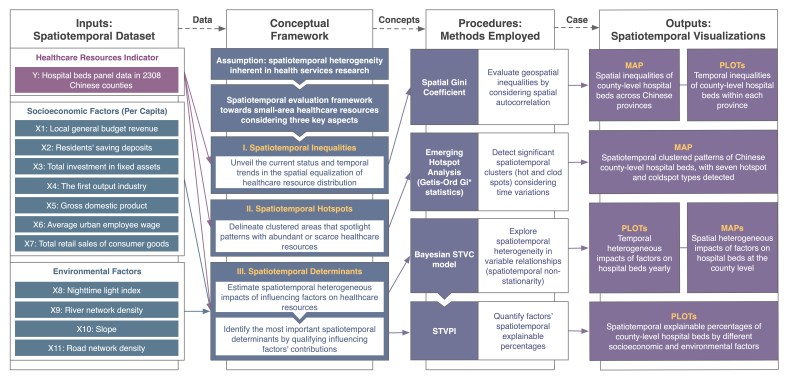
Case 7 (2024): Spatiotemporal assessment of healthcare resources using the Bayesian STVC model and STVPI.
On February 9, 2024, an article for which Chao Song is the lead author, titled “Revealing Spatiotemporal Inequalities, Hotspots, and Determinants in Healthcare Resource Distribution: Insights from Hospital Beds Panel Data in 2308 Chinese Counties,” was published in BMC Public Health. The article is accessible to the public and can be found at DOI: https://doi.org/10.1186/s12889-024-17950-y
Case 8 (2025): Small-area MMR across Chinese counties.
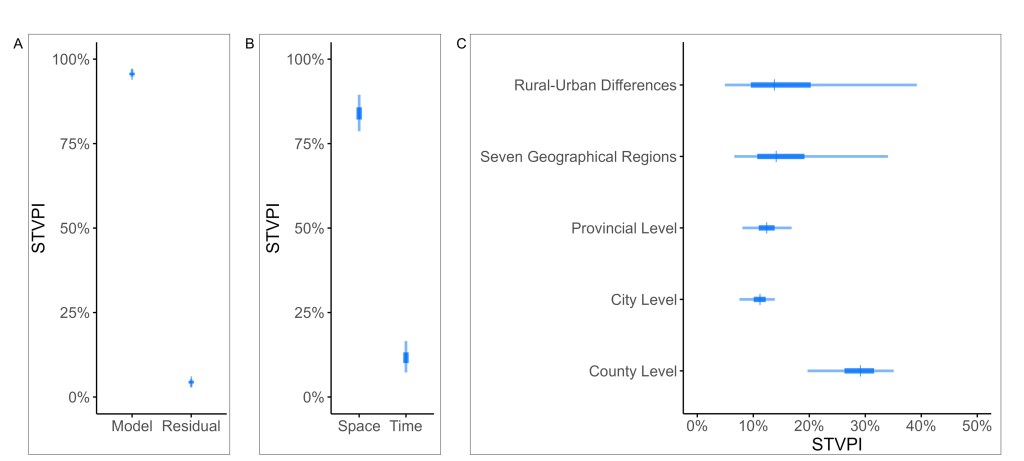
Case 9 (2025): Chinese city-level multiple healthcare resource indicators.
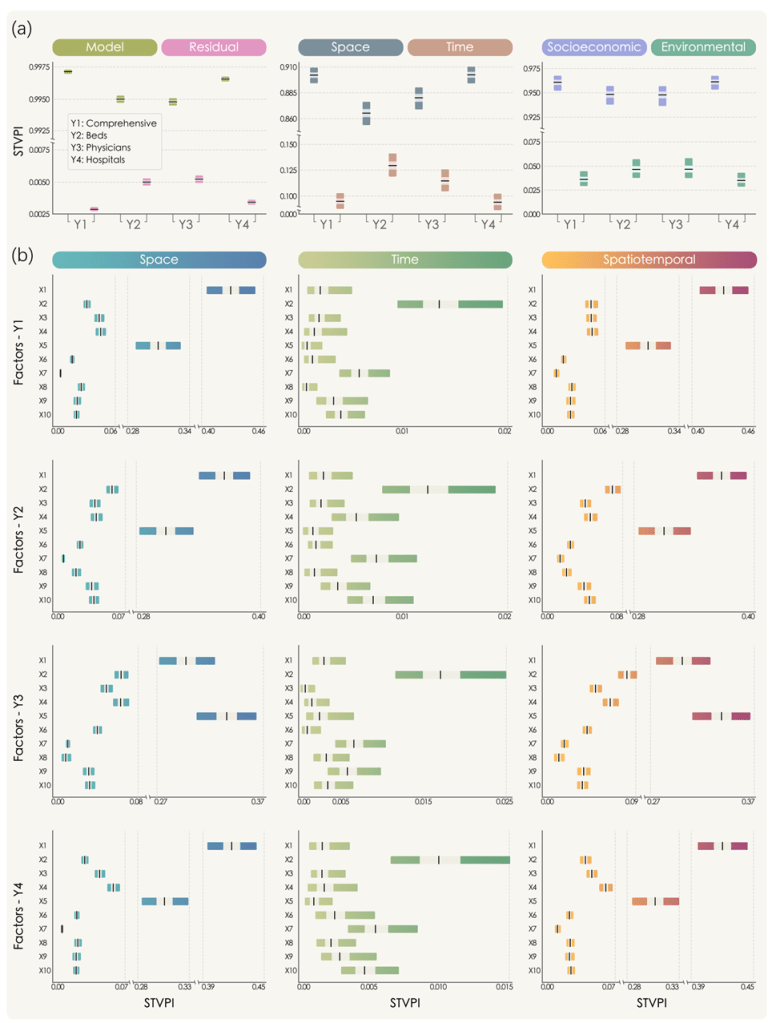
Case 10 (2025): Small-area spatiotemporal evaluation of healthcare resource allocation efficiency: an empirical study based on county-level panel data in Sichuan Province
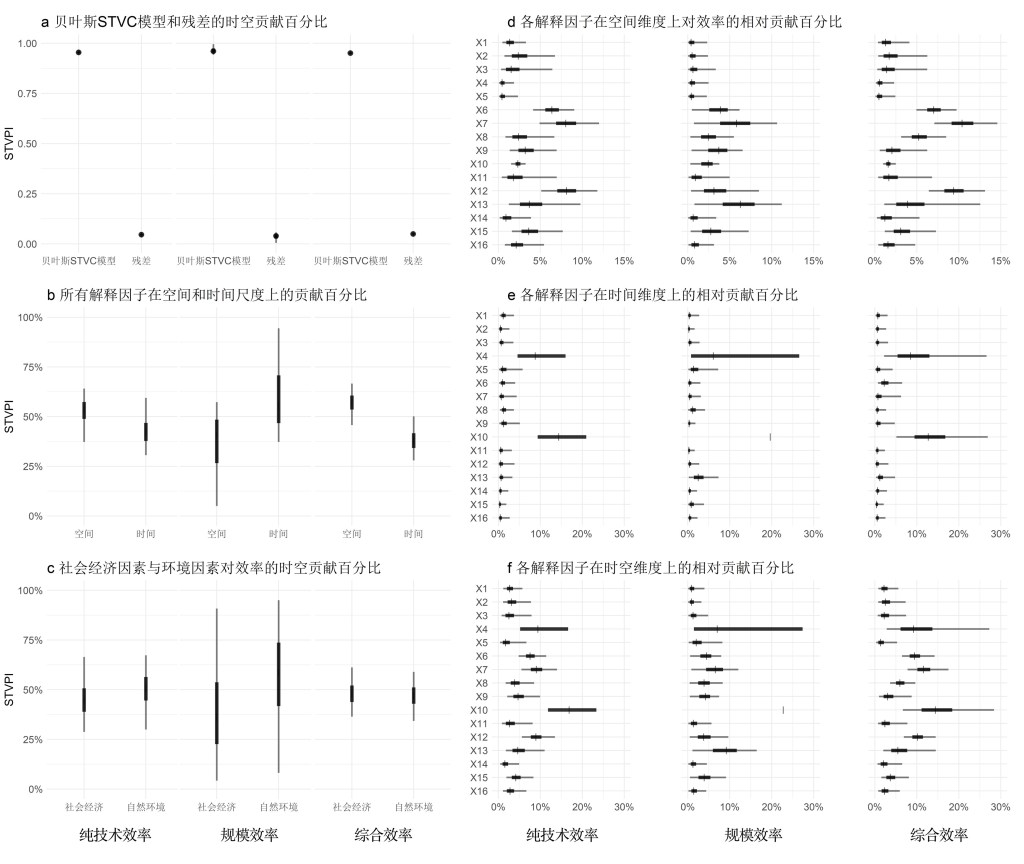
Case 11 (2025): Hand, foot and mouth disease
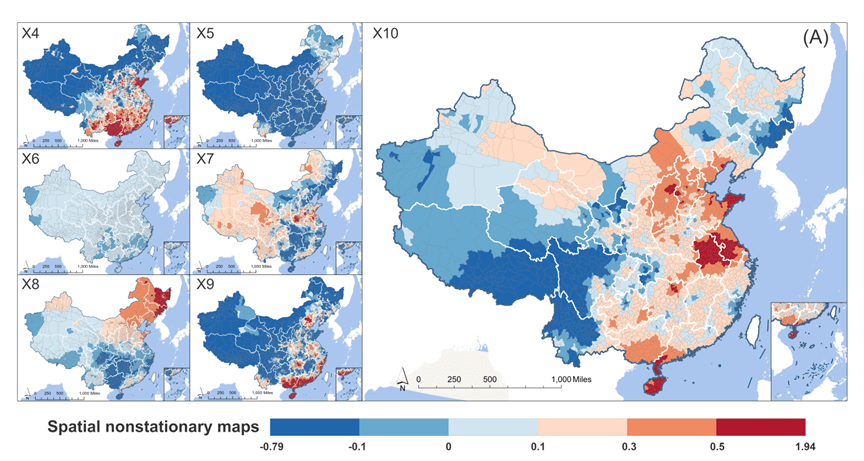
Case 12 (2025): Maternal and Under-Five Mortality
Online application
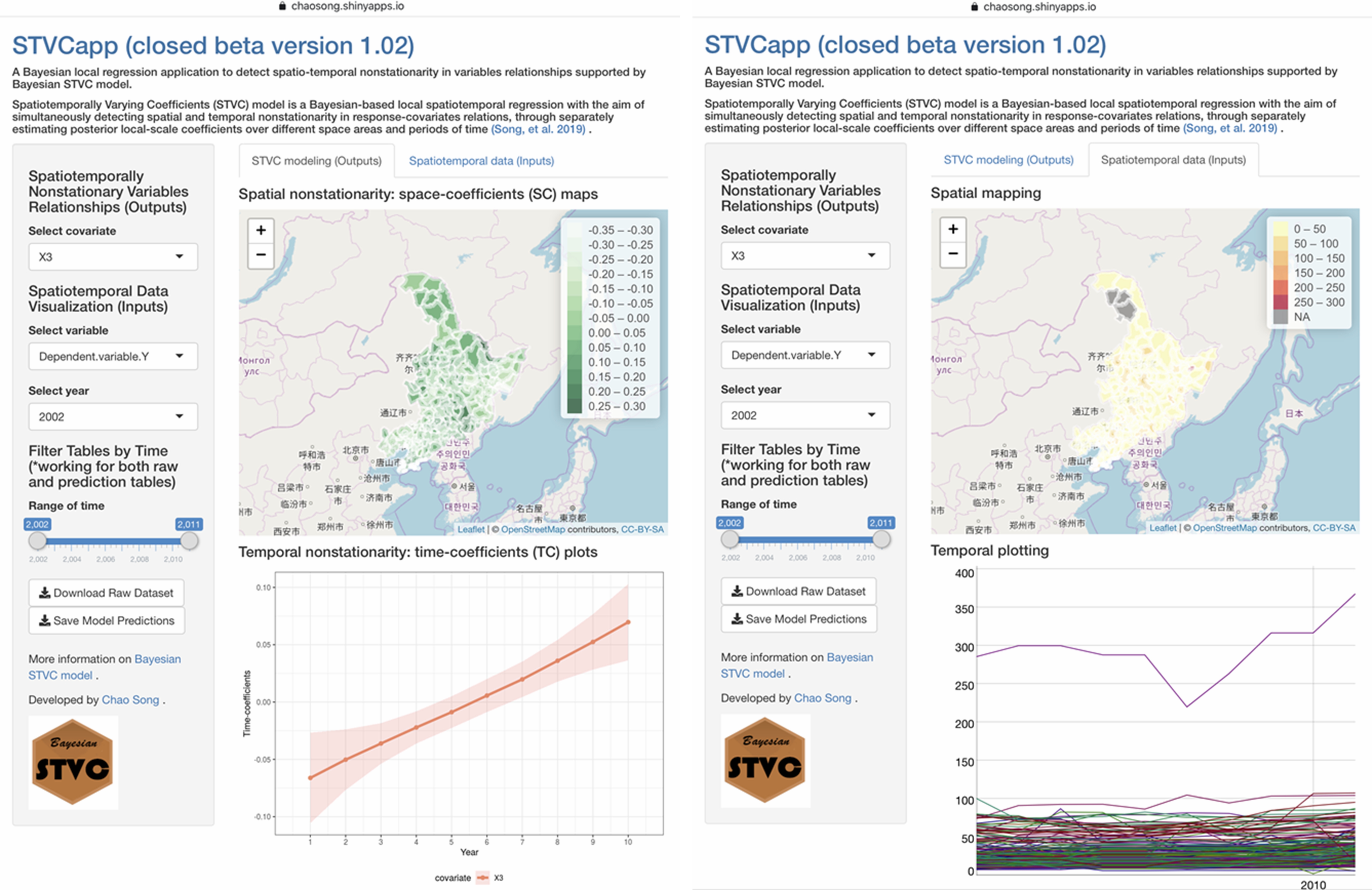
STVCapp, under development (closed beta version 1.02, since 2020)
An online application under development, STVCapp (2020): A Bayesian local regression web application to detect spatiotemporal autocorrelated nonstationarity in variables relationships supported by the Bayesian STVC model.
A Bayesian local regression application to detect spatiotemporal nonstationarity in variables relationships supported by the Bayesian STVC model.
Welcome to utilize our Bayesian STVC series models for your own research, and feel free to contact us (chaosong.gis@gmail.com).
Last updated on Feb 10, 2025 by Chao Song.
We will show more cutting-edge cases using the Bayesian STVC family of models in the near future.
Chao Song
In the meantime, theoretical innovations and tool development for BSTVC are being planned and in progress.
 Chao Song's Research Chronicles: Exploring Health & Medical Geography